Hello Kinder Garten Sublimation: A Practical Asset for Back-to-School Creative Production
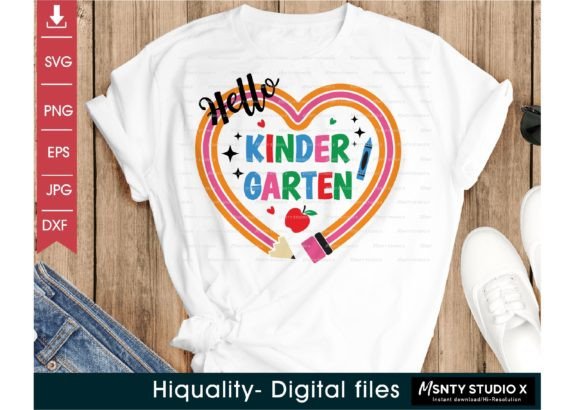
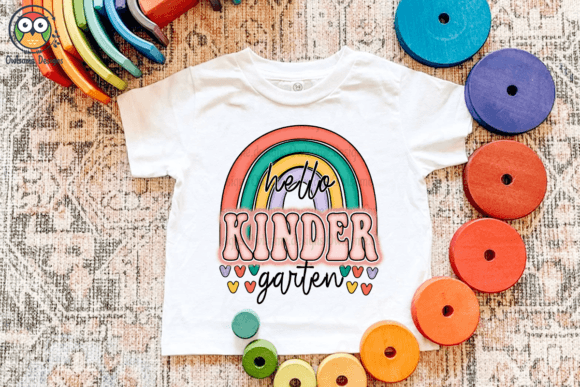
“Hello Kinder Garten Sublimation” refers to a ready-to-use digital design asset—specifically a high-resolution PNG file—intended for sublimation printing and other craft-based production workflows. It’s not a template builder, a font pack, or a multi-layered editable graphic. It’s a single, clean, 300 dpi raster file optimized for heat-transfer applications on fabric, ceramic, metal, and polymer-coated surfaces. Its purpose is functional: to reduce setup time, maintain visual consistency, and support scalable output across physical products used in educational, promotional, or personal contexts.
Where This Design Fits in Your Production Workflow
Most users acquire Hello Kinder Garten Sublimation at the “asset integration” stage—not at ideation or final delivery, but when they’ve already decided on a product line (e.g., teacher appreciation mugs, classroom welcome pillows, or student name tags) and need a reliable, school-themed graphic that prints cleanly without requiring manual cleanup or vector conversion. It arrives as a plug-and-play component: download, open in your preferred design software (Cricut Design Space, Silhouette Studio, Adobe Photoshop, or even Canva), resize if needed, and send to your sublimation printer or print-and-press service.
This timing matters. If you’re building a back-to-school collection for an Etsy shop, this file slots in after you’ve validated demand, selected base products, and confirmed your printer’s color profile—but before you batch-print or list items. For educators preparing classroom materials, it integrates during the “final asset prep” phase: after lesson planning and supply ordering, but before laminating, cutting, or assembling physical resources.
Compatibility and Real-World Constraints
The listing explicitly states this is a PNG—not an SVG—and clarifies why: shadows, anti-aliased edges, and embedded effects common in raster files prevent clean cut lines in cutting machines. That’s not a limitation—it’s a signal about intended use. SVGs excel in vinyl cutting; PNGs with transparent backgrounds excel in sublimation, where edge fidelity and color gradation matter more than vector scalability.
Before importing Hello Kinder Garten Sublimation into your workflow, verify two things: first, that your sublimation printer supports RGB-to-sublimation color mapping (most do, but older models may require ICC profile adjustments); second, that your base material has a polymer coating or is 100% polyester—otherwise, ink won’t bond properly. Cotton blends, uncoated ceramics, or untreated wood will yield faded or inconsistent results, regardless of file quality.
Practical Implementation Across Common Use Cases
Here’s how Hello Kinder Garten Sublimation functions across different production scenarios:
- T-shirts and apparel: Import the PNG into your garment mockup tool or print software, align it to standard chest or left-pocket placement, and apply a slight 1–2% scale-up to compensate for sublimation “bleed.” Use white or light-colored 100% polyester tees for best contrast.
- Mugs and tumblers: Resize the design to fit within your press’s recommended print area (typically 3.5" × 4.5" for standard 11 oz mugs). Avoid stretching horizontally—maintain aspect ratio to preserve text legibility in “Hello Kinder Garten.”
- Pillows and tote bags: Because these accept larger surface areas, consider pairing the main design with complementary elements—like a simple border or coordinating monogram—using layering tools in Photoshop or Affinity Designer. The PNG remains the anchor; additions enhance context without competing.
- Stickers and cards: While not ideal for die-cutting, this PNG works well for printed sticker sheets (via inkjet/laser printer + printable vinyl) or flat greeting cards. In those cases, export a flattened version with a subtle drop shadow or white stroke to improve readability on busy backgrounds.
Quality Control and Consistency Checks
Because sublimation is irreversible once pressed, small inconsistencies compound quickly across batches. Build these checks into your process:
- Soft-proof before printing: Open the PNG in Photoshop and simulate your printer’s color space (usually sRGB or Adobe RGB). Toggle between “Proof Colors” (View > Proof Colors) to preview how cyan/magenta shifts might affect the pastel tones common in kindergarten-themed designs.
- Test on scrap material first: Run one mug, one coaster, or one fabric swatch at full temperature and pressure. Inspect for banding, ghosting, or haloing around text edges—especially in the “garten” portion, where fine letterforms can blur if over-pressed.
- Document settings for repeatability: Save your exact DPI, scaling percentage, and printer profile name in a shared team doc or Notion database. That way, whether you’re printing solo or delegating to a fulfillment partner, output stays uniform across orders.
Long-Term Usability and Organizational Tips
Unlike fonts or stock photos, sublimation-ready PNGs like Hello Kinder Garten Sublimation don’t degrade with use—but they do become harder to locate or repurpose without structure. Store it in a dedicated “Back-to-School Assets” folder, nested under year-specific subfolders (e.g., /2024/Designs/Hello_Kinder_Garten_Sublimation.png). Add a README.txt inside that folder noting: supported products, tested printers, known scaling ratios, and any color adjustments made during soft-proofing.
If you manage multiple designers or contractors, avoid sending raw PNGs via email or chat. Instead, share access through a cloud drive with version history enabled (Google Drive or Dropbox Business). That prevents accidental overwrites and preserves the original 300 dpi integrity—critical if someone resizes incorrectly and saves over the master file.
How It Interacts With Other Tools and Decisions
Hello Kinder Garten Sublimation doesn’t exist in isolation. Its value increases when paired intentionally:
- With project management tools: Link the file directly in a ClickUp or Asana task titled “Finalize Back-to-School Product Mockups.” Attach it to the task so designers know exactly which asset to use—not a similar-looking alternative from another source.
- With brand guidelines: If your school store or tutoring business uses a defined color palette, cross-check the PNG’s dominant hues against your brand hex codes. Minor tweaks in brightness or saturation (done non-destructively in layers) ensure cohesion without redesigning from scratch.
- With customer communication: When listing items online, include a note like “Design printed using official Hello Kinder Garten Sublimation file—crisp, fade-resistant, and optimized for polyester surfaces.” That signals professionalism and sets accurate expectations about durability and appearance.
A Note on Timing and Iteration
You don’t need to wait until August to use Hello Kinder Garten Sublimation. In fact, integrating it earlier—during June or July—lets you test production variables while lead times are shorter and material inventory is fuller. You’ll also have room to iterate: maybe the first batch reveals that “Kinder Garten” reads better at 28 pt than 24 pt on tote bags, or that adding a 1-pixel white outline improves legibility on navy fabric. Those insights feed directly into next year’s asset library—making each use less about execution and more about refinement.
Ultimately, Hello Kinder Garten Sublimation serves as a stable node in a dynamic creative process. It’s not the strategy—it’s the reliable execution point that lets you move faster, produce consistently, and focus energy where it matters most: connecting with students, supporting educators, or growing a thoughtful small business rooted in real-world needs.