Kid Patch Star Girl
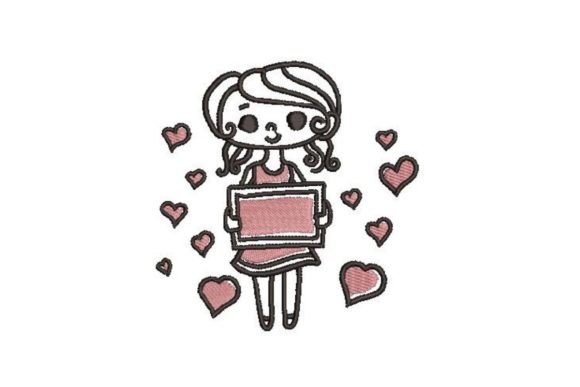
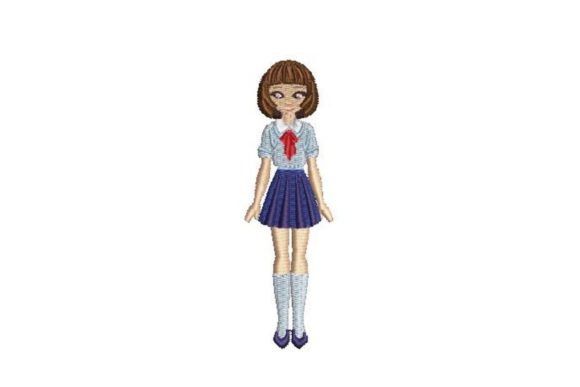
There’s something instantly joyful about the Kid Patch Star Girl embroidery design — not just because of its playful, celestial charm, but because it bridges creativity and practicality so well. Whether you're stitching a birthday gift for a niece, customizing classroom supplies for a summer camp, or building a small-batch line of kids’ apparel, this machine embroidery design delivers personality without complexity. It’s designed to be fun and easy to stitch, and it looks amazing on anything: soft cotton dresses, durable t-shirts, woven backpacks, denim jackets, even lunchbox totes.
Why This Design Fits Real-Life Needs — Not Just Wishlists
What sets Kid Patch Star Girl apart isn’t just aesthetics — it’s thoughtful execution. Unlike generic star motifs that blur into background noise, this design balances proportion, stitch density, and thread flow to stay crisp at sizes as small as 2.5 inches and scale cleanly up to 4.5 inches. That matters when you’re embroidering on curved seams or stretchy knits — areas where poorly digitized files often pucker, skip, or lose definition.
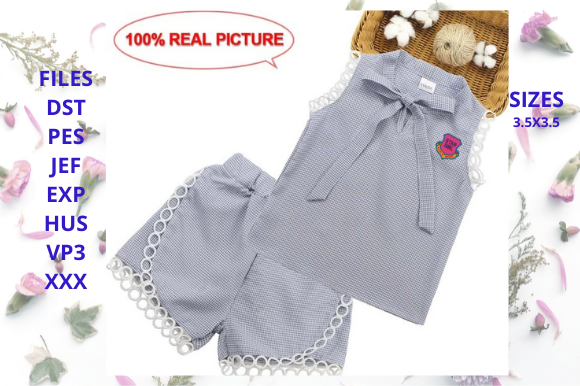
It also ships with multiple embroidery file formats (.PES, .DST, .JEF, .EXP, .VP3, .HUS) — not as a marketing checkbox, but as functional support. If you own a Brother SE600, an older Janome Memory Craft, or a commercial Tajima-compatible setup, you’ll find a native format ready to load. Skipping this compatibility step is one of the most common oversights we see — especially among beginners who assume “one file fits all” or entrepreneurs ordering from overseas sellers who only supply .PES.
Mistake #1: Assuming “Easy to Stitch” Means “No Prep Needed”
“Fun and easy to stitch” doesn’t mean skipping stabilizer selection, hooping technique, or thread tension checks. For example, embroidering Kid Patch Star Girl directly onto a lightweight jersey t-shirt without tear-away + cut-away combo stabilizer often results in shadowing or fabric distortion — especially around the star’s outer points. The fix? Use medium-weight cut-away under the hoop *and* light tear-away on top for clean satin-stitched edges. Test on scrap first — especially if using metallic or high-sheen threads, which behave differently than standard polyester.
Mistake #2: Overlooking File Integrity Before Purchase
Not all embroidery files labeled “Kid Patch Star Girl” are equal. Some are traced vector imports with jagged curves or inconsistent stitch angles; others lack underlay, causing poor coverage on textured fabrics like corduroy or fleece. Always check the seller’s preview images for stitch simulation (not just flat artwork), and look for notes about underlay, pull compensation, and jump thread trimming. Reputable sources include test stitch reports or video demos — not just static PNGs.
Mistake #3: Ignoring Placement Logic on Garments
A beautifully stitched Kid Patch Star Girl loses impact if placed awkwardly — say, too low on a toddler’s backpack strap or centered over a seam line on a dress. Better approach: map placement before hooping. For t-shirts, aim for 3–4 inches below the collar seam (not shoulder seam) for balanced visual weight. On backpacks, center 1–2 inches below the top edge — not the zipper line — so it stays visible when worn. And always mirror-test your design layout in your embroidery software: what looks right on screen may flip unexpectedly during hooping.
What to Verify Before You Download or Buy
- Stitch count range: A well-optimized Kid Patch Star Girl should land between 4,200–6,800 stitches depending on size. Files exceeding 9,000 stitches often indicate inefficient digitizing — higher risk of thread breaks or long run times on home machines.
- Color change cues: Look for logical thread stops — e.g., star outline first, then fill, then facial details — not 7 random stops for a 3-color design. Fewer color changes mean smoother workflow and less chance of mis-threading.
- Design dimensions across formats: Confirm the seller provides actual measured sizes (in inches/cm) for each format — not just “small/medium/large.” Machines interpret scaling differently, and a “medium” .PES file may not match the same “medium” .DST file.
- Licensing clarity: If you plan to sell finished items (e.g., embroidered onesies on Etsy), ensure the license permits commercial use. Many personal-use-only files don’t state this upfront — and copyright claims can escalate quickly if overlooked.
Better Choices Start With Smarter Questions
Before adding Kid Patch Star Girl to your cart or loading it into your hoop, ask yourself: What am I making it for — and what does success actually look like? If it’s for a school fundraiser, durability and speed matter more than fine-detail flourishes. If it’s for a boutique collection, consistency across 50+ pieces becomes critical — meaning you’ll want to batch-test hooping methods, not just stitch one sample.
Also consider your machine’s limits. A Bernina 790 Plus handles dense fills gracefully, but a basic Singer Futura may struggle with tight satin borders unless you reduce density in editing software. That’s not a flaw in Kid Patch Star Girl — it’s a signal to adapt. Most modern embroidery editors (like Embrilliance or Wilcom ELS) let you adjust stitch density, add manual underlay, or simplify outlines in minutes. Taking those 90 seconds pays off in cleaner results.
Real Results Come From Real Practice — Not Perfect Files
No embroidery file — no matter how expertly digitized — replaces hands-on familiarity. Try stitching Kid Patch Star Girl on three different substrates: a stable cotton poplin, a lightweight knit, and a textured twill. Note how tension shifts, where stabilizer shows through, and where trimming matters most. Keep those test swatches labeled with settings — they become your fastest reference for future projects.
And remember: the goal isn’t flawless replication every time. It’s confident iteration. When your first star has a tiny bobbin snag, that’s data — not failure. Adjust hoop pressure. Swap needle size. Try a different stabilizer blend. Each small correction builds fluency faster than any tutorial.
So whether you’re launching a side hustle, supporting a PTA craft fair, or simply making mornings brighter with personalized gear, Kid Patch Star Girl works best when treated as a tool — not a magic button. Respect its design logic, prepare your materials intentionally, and trust your growing judgment over generic advice. That’s how great embroidery begins — quietly, carefully, and completely within your control.