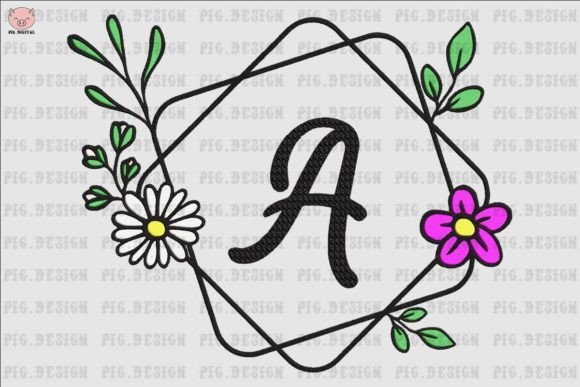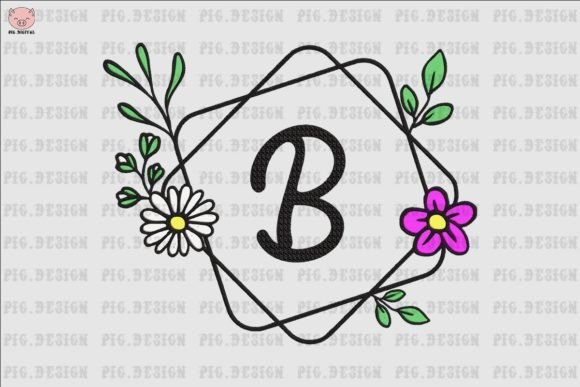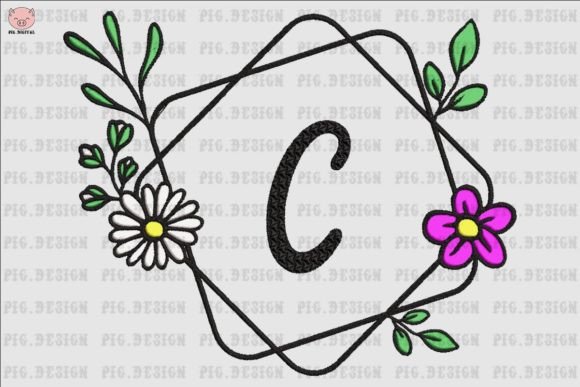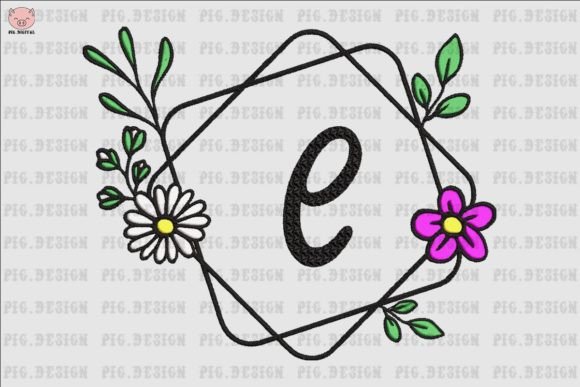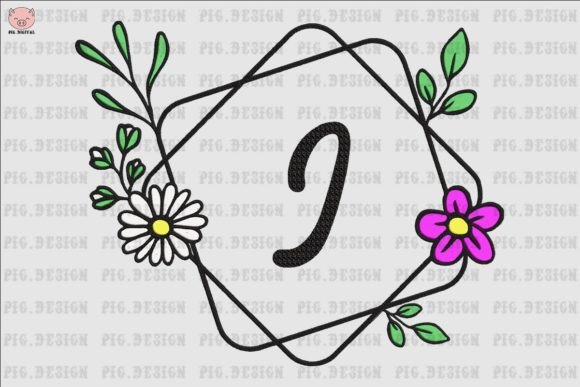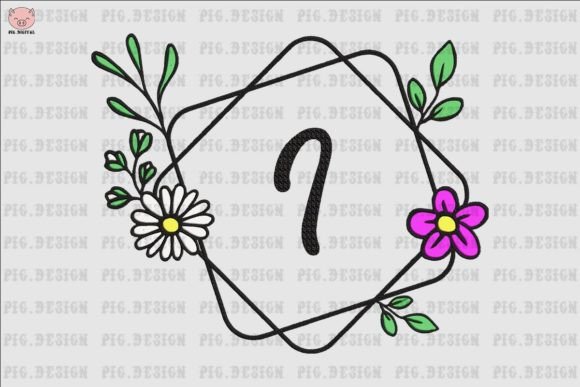
Flower Daisy Font I
Flower Daisy Font I is a machine embroidery design that combines decorative lettering with floral motifs—specifically daisy-inspired embellishments integrated into each character. Unlike standard digital fonts, it is delivered as a set of stitch-based embroidery files, intended for use with home or commercial embroidery machines. Each letter features subtle petal-like flourishes, soft curves, and balanced spacing optimized for stitching rather than screen display.
This design is not a TrueType or OpenType font file for word processing or graphic design software. Instead, it is a collection of pre-digitized embroidery patterns, available in common formats including PES, DST, EXP, JEF, VIP, and XXX. That means it’s ready to load directly into compatible embroidery machines without additional digitizing work—provided the user has appropriate software or hardware support for those formats.
Why Consider Flower Daisy Font I?
Embroiderers often seek designs that add personality and cohesion to finished pieces. Flower Daisy Font I appeals most to those who want consistent, themed monogramming or text elements across projects—especially where a gentle, botanical aesthetic fits the context. Its daisy motif lends itself naturally to spring-themed apparel, nursery decor, baby gifts, or feminine accessories.
Users evaluating this design typically fall into two groups: hobbyists expanding their creative toolkit, and small-batch crafters producing personalized items for sale. In both cases, the appeal lies in having a cohesive, machine-ready option that avoids the time and skill barrier of custom digitizing.
Practical Benefits and Realistic Expectations
One clear benefit is format versatility. With multiple file types included, Flower Daisy Font I reduces compatibility concerns across popular home embroidery machines—including Brother, Janome, Bernina, and Singer models. This saves time troubleshooting format conversions and minimizes risk of distorted stitches due to improper translation.
The design also prioritizes stitch efficiency. Letters are digitized with moderate density and smooth transitions between curves and stems, helping reduce thread breaks and stabilizer shifting during long runs. That makes it more forgiving on lightweight fabrics like cotton voile or linen blends—common choices for heirloom-style embroidery.
However, expectations should be grounded. Because it is a fixed embroidery design—not a scalable vector font—it does not support arbitrary sizing beyond what’s provided by the vendor. Most versions include three to five size options (e.g., 1”, 1.5”, 2” height), but enlarging beyond those may cause gaps in fill areas or jagged outlines. Similarly, editing individual letters (e.g., swapping one character) isn’t possible without specialized embroidery editing software and digitizing knowledge.
Also, while the daisy motif adds charm, it limits stylistic flexibility. It won’t suit industrial, minimalist, or masculine themes as readily as a clean sans-serif embroidery font would. Users seeking maximum adaptability across diverse projects may find its thematic consistency a strength—or a constraint—depending on their workflow.
When Flower Daisy Font I Is a Strong Fit
This design works well in scenarios where visual harmony matters more than typographic neutrality. For example:
- Personalized children’s clothing: Adding names to onesies, bibs, or sun hats where soft, playful lettering complements fabric choices.
- Nursery or bedroom decor: Embroidering names or short phrases onto wall hangings, pillowcases, or quilt labels.
- Seasonal gift projects: Creating birthday or Mother’s Day items where floral accents reinforce sentiment without overwhelming the message.
- Beginner-friendly customization: When users want to embroider legible, attractive text without mastering digitizing tools or adjusting underlay and pull compensation manually.
In these cases, Flower Daisy Font I offers a reliable, tested solution—reducing trial-and-error and supporting repeatable results across similar fabric types and hoop sizes.
When Alternatives May Be Worth Considering
Flower Daisy Font I is less suitable when precision, scalability, or neutrality is required. For instance:
- Branded merchandise: If you’re embroidering logos or business names requiring strict adherence to brand guidelines (e.g., specific line weights or x-height ratios), a custom-digitized font or vector-based embroidery solution may be necessary.
- Large-format applications: For banners, tote bags, or jackets where text exceeds 3” in height, built-in scaling limits may compromise stitch quality. A professionally scaled version—or a different font designed for larger dimensions—could yield better outcomes.
- Mixed-media projects: If your workflow includes combining embroidered text with appliqué, lace overlays, or multi-layered fills, Flower Daisy Font I’s fixed structure may limit layering flexibility compared to modular or outline-only fonts.
- Non-floral aesthetics: For modern, rustic, vintage, or geometric themes, other embroidery fonts—such as script variants, blocky serifs, or minimalist sans-serifs—may align more closely with visual goals.
Making an Informed Choice
Before acquiring Flower Daisy Font I, assess your typical project scope. Ask yourself:
- What kinds of items do I embroider most often? (e.g., garments, home textiles, gifts)
- How frequently do I need text elements—and how much variation in style or theme do those require?
- Do I have access to embroidery editing software if minor adjustments (like spacing or color changes) become necessary?
- What fabric types and stabilizers do I commonly use? (This affects how well the existing stitch density performs.)
If your answers point toward recurring use of gentle, nature-adjacent designs—and you value ready-to-stitch reliability over absolute customization—Flower Daisy Font I is a practical candidate. If instead your needs trend toward technical precision, broad stylistic range, or integration into complex multi-element compositions, exploring editable embroidery fonts or commissioning custom digitizing may offer longer-term flexibility.
Also consider sample availability. Reputable vendors often provide preview images showing stitch count, dimension ranges, and actual stitched samples on fabric. Reviewing those helps verify whether the design’s density, motif scale, and overall balance match your machine’s capabilities and your preferred materials.
Ultimately, Flower Daisy Font I serves a specific niche within the broader ecosystem of embroidery fonts. Its value emerges not from universal applicability, but from thoughtful alignment with particular creative intentions—where charm, coherence, and ease of use outweigh the need for infinite adaptability.